There are multiple beautiful acts of Mitzvos in Parshas Vayeira. We learn the Mitzvah of Bikur Cholim, visiting the sick, directly from Hashem. Hashem sends three angels to Avraham Avinu and Sarah, who appear to them as normal looking and functioning human beings, each with their own mission. The Chizkuni (see 18:2), as well as many other commentaries, tells us that one of the angels’ names was Raphael. The function Hashem wished for him to perform was to heal Avraham from his Bris Milah (circumcision). This is the first act of Bikur Cholim we see in the Torah.
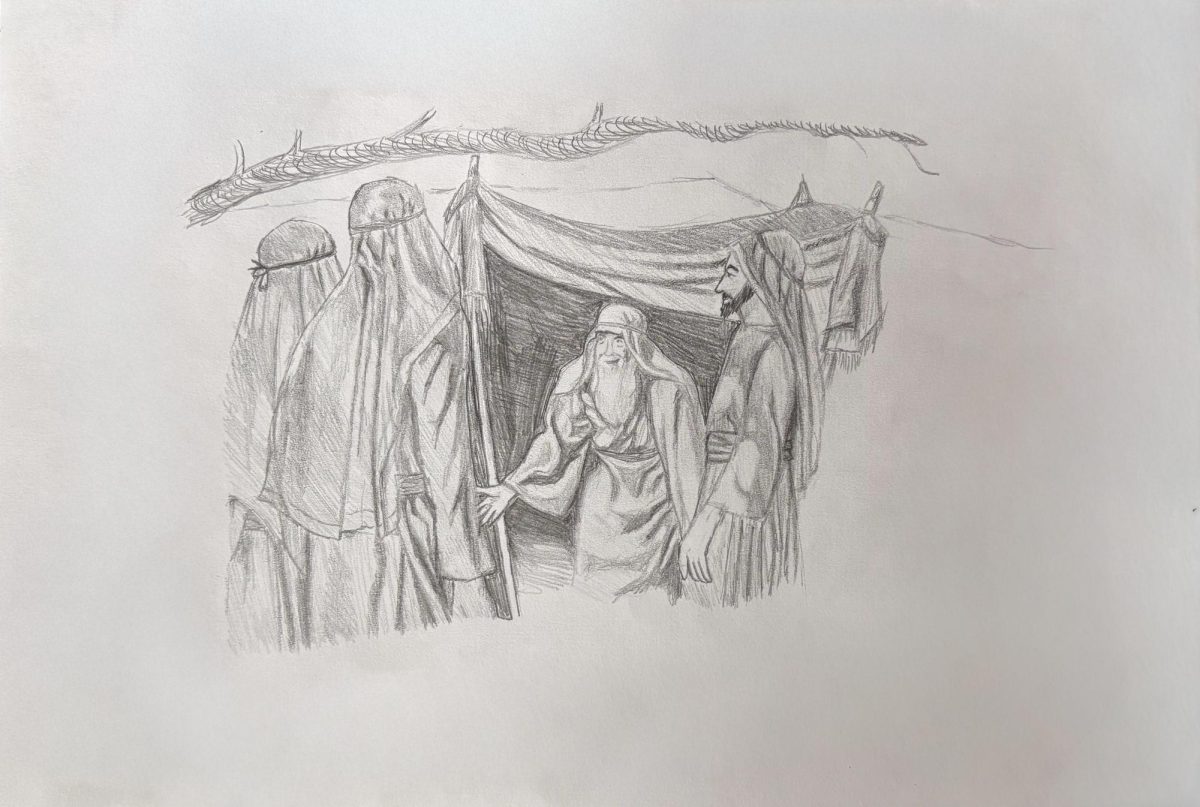
We see right after this act of Bikur Cholim, Avraham wanted to fulfill the Mitzvah of Hachnasas Orchim, hospitality to guests. In fact, the Ramaban (18:7) explains that Avraham had such a great desire to show hospitality to the angels, that he ran up to them to personally greet them. According to the Alshich (18:6), Avraham specified the word, to knead dough, when he told Sarah to bake cakes for the guests, indicating that Avraham wished for Sarah to personally knead the dough so she can also fulfill the Mitzvah of serving and welcoming guests. As the Pasuk says,
ו וַיְמַהֵ֧ר אַבְרָהָ֛ם הָאֹ֖הֱלָה אֶל ־שָׂרָ֑ה וַיֹּ֗אמֶר מַהֲרִ֞י שְׁלֹ֤שׁ סְאִים֙ קֶ֣מַח סֹ֔לֶת ל֖וּשִׁי וַעֲשִׂ֥י עֻגֽוֹת:
“Avraham hurried to the tent to Sarah and said, ‘Hurry – three measures of the finest flour, knead it and make cakes.’”
It is important to note that this episode occurred on the third day after Avraham’s Bris Milah, circumcision. The third day is said to be the most painful day of a Bris Milah. Despite this, Avraham made the decision to rush to his guests and make sure they are fed.
Near the end of the Parsha, Hashem challenges Avraham with one of the hardest tests (there were ten tests in total), commanding him to sacrifice Yitzchak, his only son, whom he loves. Beyond how challenging this must have been for him, to sacrifice his own beloved son, he bound Yitzchak on the altar atop the arranged wood, and took his knife out to slaughter him. Just as Avraham had the knife against Yitzchak’s throat (see Pirkei D’Rabbi Eliezer, Perek 30), an angel of Hashem called out to him to not kill Yitzchak. Regardless of the fact that he was stopped, this comes to show Avraham’s determination to do Hashem’s will. Even though one can imagine how difficult this must have been for Avraham, he did not question Hashem’s command to sacrifice Yitzchak.
Why not? Why would he go to the extreme of sacrificing his own child for Hashem without questioning it? The answer is a short one that contains much meaning: Bitachon, trust. Avraham always trusted Hashem, whether it was in Parshas Lech Lecha when Hashem told him to leave his hometown for Eretz Canaan (i.e., Eretz Yisrael), or when Hashem told him to throw out Hagar and his son Yishmael according to Sarah’s word. In the case of throwing out Yishmael, the Torah tells us that Avraham was deeply concerned about it, but he did it anyway because he knew that it was ultimately part of Hashem’s plan, even if it was hard to understand at the time. Similarly, Avraham demonstrated the same Bitachon when it came to sacrificing Yitzchak: because Hashem said to do it, Avraham did it without question since he knew it was all part of Hashem’s plan.
However, why was this a test in the first place? What was the point of all of the ten tests if Hashem, being omniscient, already knew that Avraham was going to trust Him? The Mishnah in Pirkei Avos (5:3) answers this question: לְהוֹדִיעַ כַּמָּה חִבָּתוֹ שֶׁל אַבְרָהָם אָבִינוּ עָלָיו הַשָּׁלוֹם, “To make known how great Avraham’s love is.” Rabbeinu Yonah explains that who it’s being made known to is mankind. The tests that Hashem gave Avraham are for us to learn from. They are for us to realize that we should be just like Avraham and have the same amount of Bitachon and Yiras Hashem (fear of G-d) to do the Mitzvos.
Through Avraham’s hospitality to the guests and fulfillment of Hashem’s command to almost sacrifice his child, we can see that he always exerted himself to do Hashem’s will, even when it was painful and difficult. May we all develop the same character traits that Avraham Avinu had, to always serve Hashem no matter how difficult the circumstances.